SpaceXSI launched Grok Voice 3.0, a speech-to-speech model on its Voice Agent API, and says one agent now handles about 20,000 Starlink calls a day across several languages. It verifies customers, troubleshoots hardware, and issues credits or replacement gear, with roughly 70% of calls closed without a human.
It costs $0.08 a minute ($4.80 an hour) and scored 86.9 on Artificial Analysis’s Speech-to-Speech Index, ahead of OpenAI’s GPT-Live-1 (83.2) and Gemini 3.8 Live (82.6).
Those resolution numbers are company-reported, so treat them as a ceiling. Still, if you sell voice agents, $4.80 an hour is the number your client’s call center is about to see.
Fast mode for Claude Opus 5.5 has dropped its waitlist. It streams output up to 2.5x faster than standard mode, with the same model weights and the same behavior, priced at $8 per million input tokens and $40 per million output tokens.
It speeds up output, not time to first token, so it shines on long generations rather than quick replies. If you’ve got an agent where users sit and watch Claude write, this is the easiest way to make it feel twice as fast.
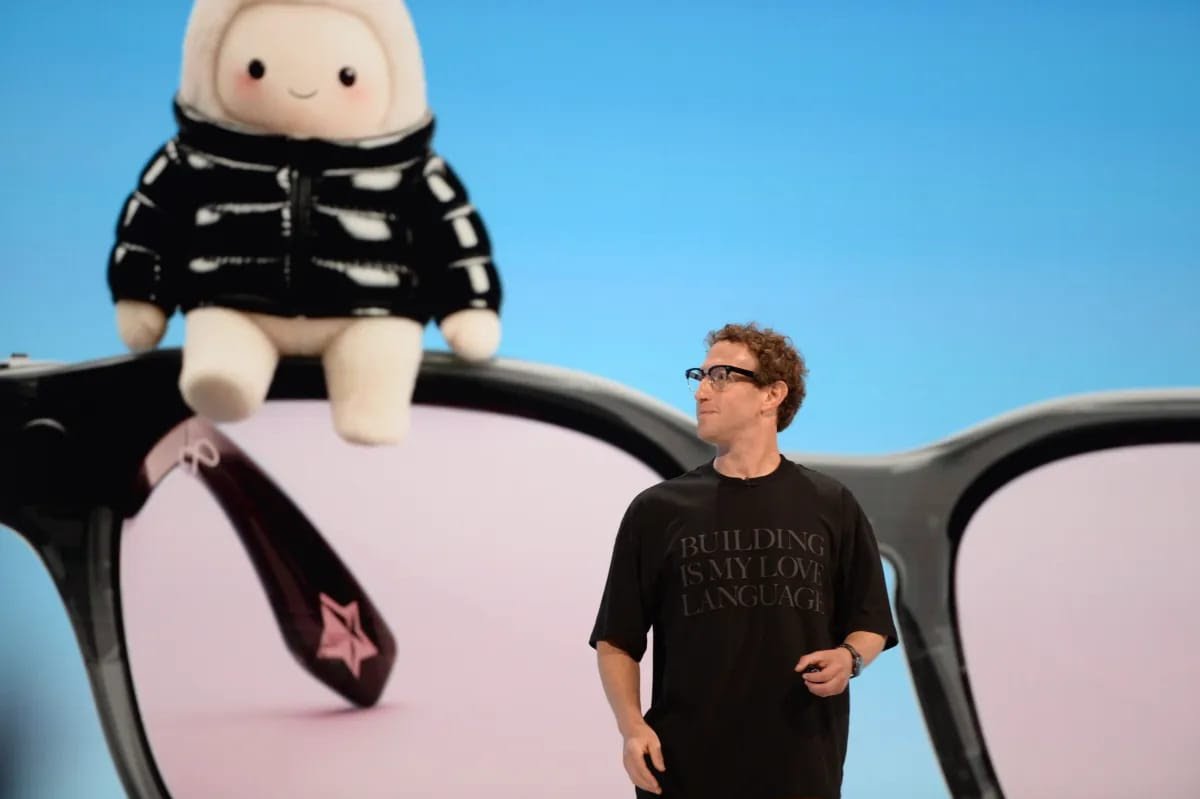
Meta released Muse Spark Open, an 816-billion-parameter open-weight model with 42 billion parameters active per request and a 1M-token context window, built for coding and agent work. It runs locally on a pair of M5 Ultra Mac Studios (you need roughly 1TB of RAM), and it’s live on several API platforms today.
There are commercial-use limits, so read the license before you put it in a client product. But a frontier-class model on your own desk is a big deal if your clients don’t want their data leaving the building.
4. Microsoft Built a Model That Needs Up to 12x Less Compute
Microsoft AI detailed MAI-Base-2, a 2.8-trillion-parameter model with 80B parameters active, trained on 16,000 GB200 GPUs in 38 days. Microsoft says it’s 4 to 12x more compute-efficient to pre-train than DeepSeek V4 Pro, and that it beats every open-weight model it tested on held-out evals. Mustafa Suleyman went further and compared it to an OpenAI model using private results.
It’s still in post-training, and the weights go to trusted partners through Foundry, not the public. The real story: Microsoft is building so it doesn’t have to lean on OpenAI.
Eight states sued OpenAI over ChatGPT safety. Arkansas, Arizona, Idaho, Iowa, Kansas, Montana, Nebraska, and West Virginia say it misled users about the risks and failed to protect minors. OpenAI says it has age-specific safeguards.
NVIDIA open-weighted Nemotron 3.5 Super VL. It’s a 120B agent model (12B active) that handles text, images, documents, and video. NVIDIA claims up to 5x throughput.
Bluesky’s Attie now lets anyone vibe-code websites and games. It started as an AI custom-feed builder. Now it builds full interactive projects on the AT Protocol.
OpenCode made DeepSeek V4.1 Flash free. The free version caps context at 200K tokens. The paid one gets 1M.
GitHub made Agentic Autofix and AI Scan generally available. Copilot now drafts security fixes and scans every pull request for you.
AI Model Releases
1. Muse Wonder and Muse Wonder Full: Frontier Models for Agents
ExpandCollapse
Takeaways
Two models, two audiences: Muse Wonder is open to developers through the Meta Model API and Muse Code. Muse Wonder Full is limited to Muse Code subscribers for now.
Built for agents: the focus is long, multi-step tasks in expert areas like law, finance and health, plus frontier-level coding.
Two new abilities: Active Memory carries context from one conversation to the next. Active Focus keeps a task going through errors and checks in before anything important.
Safety report still to come: Meta says a full report with more safety evaluations will follow.
The claims are Meta’s own: “state-of-the-art” is Meta’s description, so the real test is how the models do on independent benchmarks.
Meta has released Muse Wonder and Muse Wonder Full, which it calls its most capable models to date. Meta says both deliver state-of-the-art results on personal and professional agentic tasks, from handling an insurance claim to understanding a lease to building a working app.
Muse Wonder is available now to developers and builders through the Meta Model API and Muse Code. Muse Wonder Full is available now to Muse Code subscribers. Muse Wonder will also power features in the Muse app soon, rolling out to subscribers first.
2. Gemini 4 Argon: Google’s Enterprise Model for Long-Running Agent Work
ExpandCollapse
Takeaways
The core idea: Google is pitching Gemini 4 Argon as an enterprise model that carries out complex, long-running, multi-step tasks on its own, with a focus on accuracy, reliability, coding and security.
Autonomous execution of complex tasks: it reads long documents that mix text, tables, charts and images, combines information from many sources, and produces structured outputs for legal, finance and executive work.
Accuracy for enterprise workloads: the focus is on getting calculations right, spreadsheet analysis, financial reconciliation, legal research and accurate citations, where results have to be verifiable and repeatable.
Long-horizon coding: it can work across hundreds of files, optimise existing codebases, refactor architecture and run multi-step development tasks inside automated testing guardrails.
Engineering wins Google reports: a 40% cut in in-memory session prep time and 21% faster cold imports in its ADK Python framework, plus more agentic code submissions across its own engineering teams.
Security and vulnerability fixes: it supports defensive security work, including finding and fixing vulnerabilities through CodeMender. Google reports a 68% score on CWE-Bench v1 and better resistance to indirect prompt injection.
Availability and pricing: it is available through Gemini for business, the API, Google AI Studio and Google Antigravity. Introductory pricing is $2 per million input tokens and $10 per million output tokens until November 30, 2026, after which standard rates are double.
What matters most for AI engineers
From chatbots to execution: the focus moves from generating answers to finishing tasks end to end.
Reliability is a capability: testing, citations, honestly reporting failures and asking before irreversible actions matter as much as raw intelligence.
Big codebases are a key use case: long-running agents can make coordinated changes across many files and optimise mature systems.
Security belongs in the agent design: resisting prompt injection and controlling execution are essential once agents read untrusted documents, websites and tools.
All performance figures here are claims reported by Google and its launch partners, not independent results.
Google has launched Gemini 4 Argon, built for the deep, multi-step work that used to take teams hours or days. It is available today in Gemini for business, and developers can call it through the API as gemini-4-argon.
3. Claude Haiku 5.5: Anthropic’s Cheapest, Fastest Small Model
ExpandCollapse
Takeaways
Built for volume: Haiku 5.5 is aimed at high-volume jobs where cost matters most, such as summaries, context compaction, database queries and classification.
A subagent for the bigger models: on coding work, it pairs with Opus 5.5 or Sonnet 5.5, taking the smaller, repetitive tasks off their hands.
Anthropic’s fastest model yet: that makes it a fit for speed-sensitive work like live customer support and browser use. (Opus in Fast Mode is still quicker.)
About 75% cheaper to run than Haiku 4.5 on average, according to Anthropic.
First Haiku with an effort setting: you can now trade cost against intelligence, as with the larger Claude models.
Sonnet 5.5 got cheaper too: its cache reads are now half price, which cuts the cost of most agentic work by about 20%.
Anthropic has released Claude Haiku 5.5, which it calls the cheapest, fastest and most capable small model it has ever shipped. It is available now on every platform, with the model ID claude-haiku-5-5.
4. Mistral Large 4: A 1-Trillion-Parameter Open-Weight Model Led by Cybersecurity
ExpandCollapse
Takeaways
Mistral’s biggest model yet: a natively multimodal mixture-of-experts with 1 trillion total parameters (49 billion active per token), a 512K-token context window and up to 256K tokens of output.
Open weights are coming: it launched on October 6 as a public API preview, and Mistral has promised open weights by the end of October.
Cybersecurity is the headline: Mistral says it ranks in the top five on the Artificial Analysis Cyber Index, with 93% on Cybench and 82% on the index’s reproduce-and-patch test, which Mistral says is the highest of any model.
Self-hosting is the point for security teams: with open weights, they can run it under their own policies instead of depending on a provider’s refusals.
Built in Europe: Mistral says it trained the model from scratch on 3,800 NVIDIA Grace Blackwell GPUs in its own European datacentres.
Mistral pitches Large 4 at reasoning, coding and agentic work, and says it will become the base for a new generation of specialised Mistral models.
The cyber results come with a twist. Mistral points out that several closed models scored close to zero on the reproduce-and-patch test because they refused to do the task at all. Before the open release, the preview was red-teamed with security firms, vetted partners and state authorities, who got a less heavily moderated build with expanded cyber capabilities.
Here is how it scored on Artificial Analysis runs, made before the test harness went public:
Benchmark
Mistral Large 4
SWE-Atlas Codebase QnA (coding)
59.4%
DeepSWE 1.1 (coding)
61.7%
Terminal-Bench 4.0 (command line)
28.3%
AA Coding Agent Index
49.8
AutomationBench (agentic tool use)
59.9%
AA-Briefcase v1.1 (knowledge work, Elo)
1,393
Its Coding Agent Index score puts it ahead of DeepSeek-V4-Pro-0813 and Qwen3.8-Max on Mistral’s own chart. On the API, it costs $0.68 per million input tokens and $2.09 per million output tokens, or $0.748 and $2.299 in Mistral’s EU region.
5. Grok Voice 3.0: xAI’s New Realtime Voice Agent Model
ExpandCollapse
Takeaways
A realtime speech-to-speech model: xAI released Grok Voice 3.0 on October 14 for its Voice Agent API, under the model ID grok-voice-3.0.
A drop-in upgrade: the grok-voice-latest alias now points to it, and the WebSocket endpoint, session parameters and events are unchanged. Grok Voice 2.0 is now deprecated.
Built for agents: sessions handle audio and text, and support custom voices, function calls, search and MCP tools.
One benchmark so far, and it’s xAI’s own: xAI reports 74% accuracy on EVA-Bench. There are no independent results yet.
Closed model: the weights are not published, and parameters and pricing have not been disclosed.
For developers already on Grok Voice 2.0, the upgrade is mostly a model switch, since the API surface hasn’t changed. Function calling and MCP support mean a voice agent can look things up and take actions mid-conversation, not just talk.
Treat the 74% figure as a launch claim until independent speech benchmarks catch up. Text-model leaderboards don’t rank voice models like this one either, so expect few side-by-side comparisons for now.
6. Qwen-Image-2.1: One Open-Weight Model for Image Generation and Editing
ExpandCollapse
Takeaways
The core idea: Qwen-Image-2.1 is an open-weight model that both generates and edits images. It adds native transparency, up to 10 reference images and efficient inference, all in a compact 7B-parameter visual generation component.
Compact, efficient architecture: 32 single-stream Diffusion Transformer (DiT) layers with 7B parameters. Mixed-granularity attention and KV cache reuse speed up inference, especially when editing several input images at once.
Generation and editing in one model: it handles text-to-image and image editing, including native transparent images and editing of RGBA layers.
Up to 10 reference images: it combines subjects and assets from several images into one coherent picture, for uses like virtual try-ons, group portraits and interior design.
Precise local edits: mark a region with a circle, painted annotations or a separate mask, and it changes only that area while leaving the rest of the image intact.
Higher fidelity: it works to preserve faces, product shapes, textures and text, and improves typography, portrait lighting and fine detail, so edits stay consistent.
Broad creative uses: panoramas, infographics, storyboards and step-by-step edits for simple animations, useful across design, e-commerce, marketing and visual storytelling.
What matters most for AI engineers
Efficiency: KV cache reuse means the static image and text context isn’t recomputed at every denoising step.
Richer editing: multiple reference images plus region-based controls make complex image transformations possible.
Fewer models to run: generation, editing and transparency live in one model instead of several specialised ones.
Practical to deploy: a 7B visual generation component keeps a good balance between image quality and compute cost.
The model shown on Hugging Face is Qwen-Image-2.1-Turbo, an accelerated checkpoint that generates in just 8 denoising steps with the same 7B architecture. It loads directly with QwenImage21Pipeline in Diffusers and ships with its sampling schedule built in, so there is nothing to configure.
One caveat: the weights are released under Qwen’s own research licence, not a standard open-source licence, so check its terms before using it commercially.
7. LFM2.5-24B-A2B: Liquid AI’s 2B-Active Reasoning Model for On-Device Agents
ExpandCollapse
Takeaways
Big model, tiny active footprint: 24B total parameters, but only about 2B are active per token, so it runs fast and privately on a laptop.
Built for agents: on Liquid AI’s numbers, it beats Qwen3.6-35B-A3B, a model with roughly 50% more parameters, on LiveClaw (48.09 vs 38.19) and most tool-use tests.
Always reasons first: it is a pure reasoning model that thinks before every answer, and each thinking token is cheap because so few parameters are active.
Fast on real hardware: 184 tokens/s on an Apple M5 Max, up to 1.7x faster than comparable MoE models, and over 21K output tokens/s on a single NVIDIA B300 GPU.
Not a know-it-all: Liquid AI says it is weaker on knowledge-heavy tasks and should be paired with retrieval or web search. It also trails Qwen3.6 on SWE-Bench Verified (51.0 vs 66.2).
The last of its family: it is the largest and final LFM2.5 model, completing a line that runs from 230M to 24B parameters.
Liquid AI has released LFM2.5-24B-A2B on Hugging Face, along with a base model for fine-tuning and ready-made FP8, GGUF, ONNX and MLX versions.
Company Under the Spotlight
Colossal Biosciences: Bringing Back the Woolly Mammoth With CRISPR
What if extinction didn’t have to be forever? Colossal Biosciences is betting it doesn’t. The company is using CRISPR gene editing to write core woolly mammoth traits, such as thick hair, large fat deposits and small ears, into the genome of the Asian elephant, the mammoth’s closest living relative. The goal isn’t a perfect clone. It’s a functional mammoth-elephant hybrid that can survive the Arctic tundra. Return enough of these cold-adapted giants to the wild, Colossal argues, and they could restore ancient grasslands, slow the thaw of the Arctic permafrost and help fight climate change. Call it de-extinction or call it playing god: either way, it’s one of the boldest bets in biotech.
ExpandCollapse
The Species Colossal Is Trying to Revive
Colossal is working on six species. The approach is the same each time: read the extinct animal’s DNA, find where it differs from its closest living relative, edit those traits into the relative’s cells, then grow an animal from those cells. Mammals need a surrogate mother. Birds need a different route, through germ cells and eggs.
1. Woolly Mammoth
The last mammoths died out about 4,000 years ago on Wrangel Island, through hunting and a changing climate. Colossal wants a cold-resistant elephant with mammoth traits to graze the Arctic again and help protect the permafrost.
Collect well-preserved mammoth samples from Alaska and Siberia.
Sequence several mammoth genomes, plus the genome of the Asian elephant, its closest living relative.
Find the genes behind cold adaptation.
Grow elephant cells and make about 65 gene edits to create cold-adapted cell lines.
Test the edits using stem cells and animal models.
Move the edited nucleus into an elephant egg and implant the embryo in an Asian or African elephant surrogate.
Wait out a 22-month pregnancy for the first calves.
Settlers hunted the thylacine for preying on livestock, with bounties on its head from 1830. The last known one died in a Hobart zoo in September 1936. As an apex predator, Colossal says its return would help stabilise Tasmania’s ecosystem.
Sequence the thylacine genome (done in 2018, updated in April 2022) and those of its closest living relatives.
Build computational biology pipelines to compare them.
Create marsupial cell lines and stem cells (iPSCs).
Use CRISPR to edit thylacine traits into the genome of a dasyurid, a small living marsupial relative.
Transfer the edited nucleus into a dasyurid egg (somatic cell nuclear transfer, or SCNT) and grow the embryo.
Implant it in a surrogate for a pregnancy of up to 42 days.
The flightless dodo lived only on Mauritius. After Dutch settlers arrived in 1598, the rats, pigs and macaques they brought ate the birds and their eggs, and the dodo was gone by around 1690. Colossal is working with the government of Mauritius to bring it back and rewild it.
Build high-quality reference genomes to compare.
Grow primordial germ cells (PGCs, the cells that become eggs and sperm) from the Nicobar pigeon, the dodo’s closest living relative.
Transfer those pigeon PGCs into chicken hosts.
Use the Nicobar pigeon and Rodrigues solitaire genomes to guide the edits.
Improve multiplex gene editing (many edits at once) and automate the pipeline.
The dire wolf, an Ice Age apex predator, has been gone for more than 10,000 years. It is the species where Colossal says it has already succeeded.
Recover and read ancient dire wolf DNA.
Make 20 targeted edits across 14 genetic loci to give living canids dire wolf traits.
Raise the pups: three so far, named Romulus, Remus and Khaleesi.
Colossal shares the pack’s growth through a public development tracker. It also acknowledges the debate over whether this is true de-extinction or “functional de-extinction”: animals with dire wolf traits rather than dire wolves themselves.
The moa were giant flightless birds from New Zealand, the largest standing 3.6 metres tall. Overhunting by early Māori settlers wiped them out in the 13th to 15th century, in less than 100 years. Colossal wants to restore their role as a key plant-eater and seed spreader.
Sequence high-quality and ancient moa genomes.
Grow primordial germ cells (egg and sperm precursors).
Choose a surrogate bird: the tinamou or the emu.
Make multiplex gene edits and automate cell production.
The bluebuck, a South African antelope, was last seen in 1799. It was the first large African mammal that humans drove to extinction in recorded history, through overhunting and colonial expansion. Colossal says the work could also help endangered antelopes alive today.
Extract DNA from the seven museum specimens that remain.
Find the genetic differences between the bluebuck and its closest living relatives, the roan and sable antelopes.
Create antelope cell lines and edit bluebuck traits into them.
Develop better assisted reproduction for antelopes.
Being Mean to Claude Can Get You Banned: A Deeper Dive Into What It Actually Means
Anthropic updated its usage policy to cover “sustained and needless” abuse of Claude, and the headlines made it sound like snapping at a chatbot could cost you your account. The actual policy is much narrower than that, and more interesting. I break down what changed, what the rule does and doesn’t cover, how Claude’s constitution shapes its training, and why your insults don’t feed RLHF.
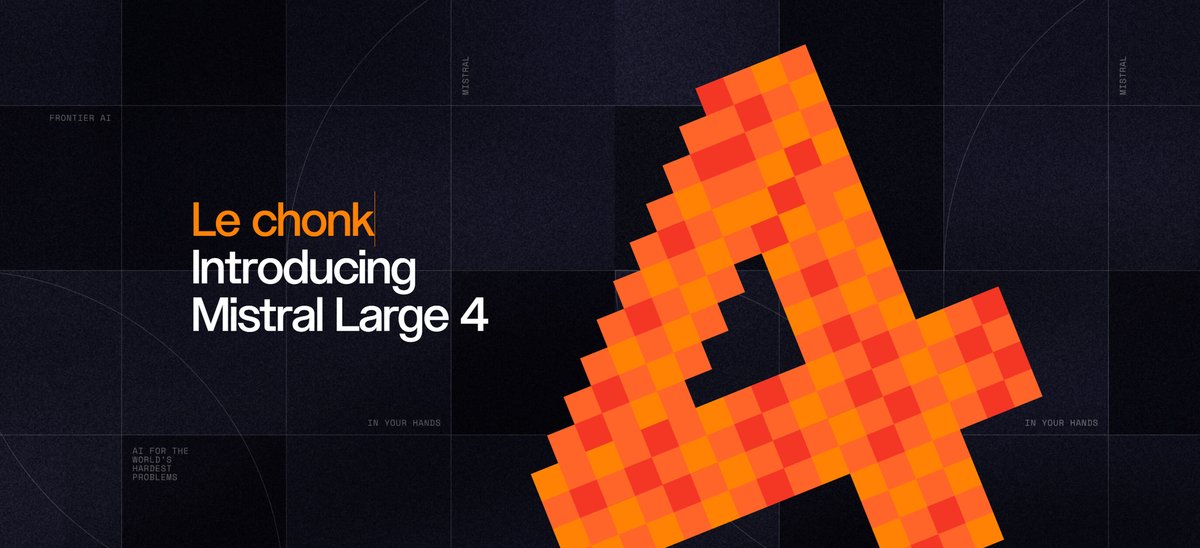
Mistral’s Sovereign Appeal: Mistral Large 4 “le Chonk”
Mistral Large 4 is the most powerful model yet from a European company, and it leads every publicly available model at fixing memory-safety bugs. But the full leaderboards tell a more mixed story than Mistral’s launch charts. I go through all 20 benchmark charts, compare them with the independent Artificial Analysis rankings, and look at what its sovereign, self-hostable pitch really offers.
This paper formalizes harness self-evolution: a paradigm where an AI agent improves its task performance and efficiency by automatically revising its software scaffolding (prompts, memory, workflows, and executable code/plugins) while keeping the underlying LLM weights completely fixed.
Core framework and taxonomy: it organizes harness updates into two main tiers:
Executable targets: tool implementations, repository-level control/runtime logic, and plugin compositions.
Theoretical grounding: it models harness search through evolutionary algorithms (EAs) and applies continual PAC-learning principles (algorithmic stability and concentration bounds) to prove conditions for expected generalization, bounded cumulative regression (preventing catastrophic forgetting), and statistical admission criteria using fresh validation data.
Practical and societal impact: it examines real-world deployment across personal workspaces, enterprise automation, scientific discovery, robotics, and clinical systems, and stresses that persistent self-modifying code needs strict external sandboxing, version tracking, and continual re-validation.
Why You Should Spend Time Reading It
Weight-free, cost-effective agent adaptation: if fine-tuning large models or managing multiple weight checkpoints is too expensive or impossible (for example, when you work through proprietary APIs like Claude or GPT), this paper lays out a blueprint for making agents keep learning and adapting purely through software scaffolding.
First rigorous theoretical analysis of agent scaffolding: unlike papers that rely only on benchmark scores, it establishes formal PAC-learning bounds for generalization and retention in self-evolving agents. It offers practical mathematical rules for deciding when a candidate harness edit should be safely accepted or rejected.
A clear taxonomy of modern self-improving systems: it unifies agentic approaches such as PromptBreeder, SkillOpt, Agentic Context Engineering, and Everything-Is-A-Plugin (EIP) into one structured search framework: local elitism, quality diversity, Pareto selection, and recombination.
Safety and governance guidelines for self-modifying AI: it highlights realistic engineering risks of persistent updates, such as buggy workarounds becoming permanent rules, reward hacking, and runaway error propagation. It also gives actionable advice on enforcing boundaries, like keeping emergency stops and final evaluation logic outside the editable surface.
2. Waypoint-OPD: Transferring RL-Induced Policy Shifts via Gated On-Policy Distillation
ExpandCollapse
TL;DR of the Paper
This paper introduces Waypoint-guided On-Policy Distillation (Waypoint-OPD), a method for transferring reinforcement learning (RL)-induced improvements from a teacher model to a student model, on the student’s own generated responses.
Standard policy-shift distillation methods like Direct-OPD only look at the endpoint change: the difference in log probabilities between the teacher before RL training (π0) and after it (π1). Waypoint-OPD shows this endpoint shift can be misleading, because early and late training shifts can oppose or cancel each other out.
By adding an intermediate waypoint checkpoint (πm) from the teacher’s RL run, Waypoint-OPD checks whether the teacher’s action-preference shifts were directionally consistent over time. If early and late shifts point the same way, the training signal is kept. If they conflict, it is suppressed.
Why Is It Important?
Fixes a hidden flaw in direct policy-shift transfer: earlier state-of-the-art distillation methods transfer the teacher’s final policy changes without checking whether those changes were stable during the teacher’s RL run. Waypoint-OPD shows that checking directional consistency gives much higher-quality supervision.
No verifier or extra RL rollouts needed: unlike running RL on the student directly, it needs no ground-truth verifiers or expensive reward-model queries during student training.
Minimal compute overhead: it uses the same frozen-teacher setup as Direct-OPD and adds only one extra frozen-teacher forward pass for the waypoint checkpoint.
Student outperforms teacher: students can beat their teacher’s final performance on several math and coding benchmarks (for example, a Qwen3-14B student outscoring the Qwen3-4B teacher).
What Is Novel in the Research?
Temporal agreement as a gate: it is the first framework to use the directional agreement between consecutive shifts in a teacher’s RL trajectory (π0 → πm vs. πm → π1) as an evidence gate that selectively weights transfer signals on student-visited prefixes.
Student-local top-k centered shift gating: instead of measuring global token likelihoods, it computes qt-centered log-probability differences restricted to the top-k candidates the student favours, then applies a positive-cosine gate: gt = max(0, ct).
Batch-scale normalization (κB): a dynamic batch scaling step keeps the average rescaled gate stable across training batches without distorting relative prefix weights or zeroed-out gates.
Why You Should Spend Time Reading It
Strong results across scales and domains: tested on Qwen3-8B, 14B and 30B-A3B (MoE) across hard math reasoning (AIME, HMMT, AMC) and competitive coding (MBPP+, LiveCodeBench), Waypoint-OPD consistently gets the highest average score among all distillation baselines.
Shorter generations and faster training: gating out noisy signals lowers student truncation rates and mean response length, cutting total GPU training hours by about 3.7% compared with Direct-OPD.
Practical and reproducible: the paper includes clean mathematical formulations, pseudocode (Algorithm 1), hyperparameter setups, and extensive ablations showing why shuffling or removing the gates hurts performance.
3. Player-1: Learning to Play from Synthetic Experience
ExpandCollapse
TL;DR of the Paper
PLAYER-1 is a post-training framework that teaches multimodal computer-use agents to play complex 2D/3D video games through synthetic experience, rather than relying only on human gameplay demonstrations.
The authors extend the standard computer-use action space (adding relative mouse movement, button holds, and multi-button composite actions), fine-tune models on curated gameplay trajectories, and then train them with PPO reinforcement learning inside PLAYER-1-GYM: a suite of 16 synthetic, programmatically verifiable game environments.
The resulting models, Player-1-9B and Player-1-35B-A3B, achieve state-of-the-art results on Minecraft (MineDojo-300), ViZDoom-10, and GameWorld, showing that skills learned in synthetic environments transfer to unseen commercial games.
Why Is It Important?
Solves the demonstration bottleneck: traditional game agents lean heavily on huge human video datasets (imitation learning/SFT). But demonstrations cover only a fraction of possible game states and lack the interactive feedback an agent needs to recover from its own mistakes.
Scalable interactive RL without game API lock-in: training RL agents directly on commercial games is hard because those games rarely expose programmatic, verifiable reward APIs. PLAYER-1 gets around this with synthetic environments built around shared core mechanics (aiming, driving, platforming, combat) that produce exact state-based rewards.
Out-of-distribution generalization: an agent trained on generic synthetic 2D/3D mini-games carries its motor control, camera management, and timing over to entirely unseen titles such as Watch Dogs 2, ViZDoom, and Minecraft.
What Is Novel in the Research?
Extended game-control action space: it adapts standard desktop GUI action spaces for fast-paced games by adding relative pointer motion (Δx, Δy) for camera rotation, sustained inputs (long holds vs. taps/clicks), and composite actions that fire several keyboard/mouse inputs at once (for example, holding W + Shift while clicking).
PLAYER-1-GYM: a new suite of 16 synthetic 2D/3D games grouped into 5 control-demand families: Aiming, Combat, Driving, Navigation, and UI Interaction.
4D environment randomization: to prevent overfitting, PLAYER-1-GYM randomizes 4 dimensions across episodes: Appearance (lighting/colours), Camera (angles/FOV), Scene (layouts/spawns), and Control Dynamics (mouse sensitivity/movement acceleration).
Composite actions emerge on their own: RL naturally pushes the agent toward multi-input actions, which rise from 64.7% to 93.2% of interaction turns during RL, with no explicit reward for combining inputs.
Why You Should Spend Time Reading It
Big benchmark gains: on MineDojo-300 (Minecraft), Player-1-9B lifts task success from 10.54% (SFT baseline) to 38.33%, well ahead of external baselines like GameWAM (12.63%) and JARVIS-VLA (6.71%).
A blueprint for general-purpose digital agents: if you work on Vision-Language-Action (VLA) models, GUI/computer-use agents, or embodied AI, the paper lays out the full post-training recipe (data curation, action mapping, reward design, and advantage normalization) for bridging high-level vision-language reasoning with low-level, real-time spatial control.
Open source: the codebase, synthetic environments, and project assets are available to the research community.
Jeva builds directly on, and fixes the structural flaws of, Jev (and its open-weights derivative JevK5), a pioneer among System 1 direct decision-making models. Jev introduced direct, non-autoregressive decision extraction from token logits, but it relies on conventional joint text serialization: the request and the candidate options are encoded together in a single prompt.
As a result, Jev can’t cache options across requests, has a high decision flip rate (26.17% under option-order permutations), degrades when candidate lists grow large (needing recursive selection passes), and relies on ad-hoc “None” candidates for null detection. Jeva is Jev’s architectural successor: it decouples request encoding from option memory, fixes Jev’s order sensitivity, enables 20×+ caching speedups, and adds mathematically grounded null awareness.
ExpandCollapse
TL;DR of the Paper
This paper introduces Jeva, a decision-native architecture for “System 1” AI models: models built for fast, direct, non-autoregressive decisions such as tool selection, document reranking, or multiple-choice classification.
Current System 1 models concatenate the request and the candidate options into a single text prompt. The authors argue this design violates four essential properties of decision-making:
Null-aware: telling apart “no candidate applies” from “uncertain among candidates”.
Permutation-invariant: reordering the options should never flip the chosen output.
Option-scalable: handling large or variable candidate counts without redefining the model’s output heads.
Cacheable: reusing candidate encodings across different user requests.
Jeva fixes this by encoding the request and the options independently with a shared language backbone. A lightweight decision module then refines only the request state against an immutable option memory, using symmetric attention aggregation.
Why Is It Important?
Eliminates prompt-order bias: traditional LLMs suffer from position bias (for example, preferring the option labelled “A” or options placed at the start or end). Jeva guarantees permutation equivariance, so shuffling the options never changes the decision.
Big efficiency and latency gains: because option representations are computed independently of the request, candidate pools (such as a database of 2,000 tools or passages) can be pre-encoded and cached. On long-document candidate sets, cross-request option caching gives Jeva roughly 20× to 28× speedups in median latency.
Better null detection: a standard softmax forces probability mass onto the given candidates even when all of them are wrong. Jeva has a dedicated coverage gate that detects when “none of the above” applies.
What Is Novel in the Research?
Decoupled architecture with set-conditioned refinement: a single shared text encoder processes the request and options independently. A candidate-conditioned state refinement block then updates only the request state, capturing interactions among options without O(K²) option-to-option interaction matrices.
Explicit coverage and conditional competition: open-set decision-making is factorized as P(Outcome) = P(Answer Present) × P(Candidate i | Answer Present). The coverage gate estimates overall answerability independently of the candidate-set size.
Unified Choice, Noul and Score readout: one architecture handles categorical choices (Choice), Boolean/verification queries (Noul), and numerical rubric grading (Score), with no extra encoder fields or separate task heads.
Why You Should Spend Time Reading It
Mathematical and empirical foundations: the paper gives rigorous proofs that a single decision block can express set-dependent preference reversals while keeping exact candidate permutation invariance.
Strong results across benchmarks: evaluated on BANKING77, MASSIVE, Mind2Web and ToolRet, Jeva-4B reaches near-perfect null detection (98.66% AUROC), a 0.0% candidate-permutation flip rate, and scales up to 2,048 options.
Practical system design: if you build agentic workflows, tool-retrieval routing, or low-latency classification systems, Jeva is a practical blueprint for fast, cache-friendly decision models that skip expensive autoregressive LLM decoding.
1. Harness² (google-research/harness2): Recursive Agent Harnessing in an Open World
ExpandCollapse
A harness is the system around a model that lets it act as an agent: prompts, tools, memory, skills, orchestration, and more. Harnessing is the process of optimizing that system.
Harness² is a plug-and-play framework for recursive agent harnessing in an open world, where agents meet tasks that were unseen when the harness was designed. It connects two levels of recursion while keeping model weights fixed:
Task-level recursion refines the execution harness for the current task through a contrastive Propose–Probe–Compose step: propose edits, probe their effects on the same task, and compose a refined harness from the behavioural contrasts between executions, without ground-truth feedback.
Harnessing-level recursion updates a persistent improvement harness with the adopted harnesses and evidence-supported lessons from each task, to guide future refinement.
2. /brag (latent-spaces/brag): Turn Your Project Into a Launch Video
/brag is an agent skill that turns the project you built into a short, shareable launch video, with music, motion, and share copy included. It’s one command, powered by Hyperframes.
The looping video on the launch site was made by /brag on this very repo.