1. Elon Musk Accuses an Indian Billionaire of Oligarchy
Elon Musk has accused an Indian billionaire of oligarchy, the latest flare-up in the fight over who gets to sell satellite internet in India.
Read the full storyShow less
The background: Starlink wants to enter India, and the country’s incumbent telecom giants see it as a direct threat to their broadband business.
Whatever you think of the spat, it hides a bigger question. Should India let Starlink become the internet for the places that matter most?
2. Anti-Drone Laser Defence Deployed to Protect Hegseth, Rubio and Trump
A new anti-drone defence system, including a directed energy weapon (a laser-based interceptor), has reportedly been installed near Palm Beach International Airport in Florida.
Read the full storyShow less
It is meant to protect Pete Hegseth, Marco Rubio and President Donald Trump, along with civilian aircraft and high-value sites such as Mar-a-Lago.
Military experts quoted in the report say it is built to counter drone attacks in sensitive civilian and political zones. That marks a shift: drones are now treated as a threat to home airspace, not just a battlefield problem from Ukraine to Iran.
The reason lasers matter is cost. A missile interceptor can cost far more than the drone it shoots down. A laser shot costs little more than the electricity behind it, so the defender stops losing money on every kill.
3. Houthi Strike on Saudi Airport Kills 12, Worst Attack on the Kingdom in a Decade
A Houthi strike on a Saudi airport has killed 12 people, the worst attack on the kingdom in a decade. Reuters also reports a loud blast heard at Riyadh airport, with airlines cancelling more flights.
Read the full storyShow less
This is what cheap drone warfare looks like. The Houthis have built their campaign on low-cost drones and missiles, and they can still hit an airport in one of the region’s best-defended states.
The economics favour the attacker. A cheap drone forces the defender to fire expensive interceptors or simply absorb the hit. That is exactly the gap laser systems like the one above are trying to close.
4. Russia’s New Jet-Powered Shahed Drones Are Outrunning Kyiv’s Air Defences
Russia has started flying a new class of jet-powered attack drones over Kyiv. They cross the sky at hundreds of kilometres per hour, leaving Ukrainian air-defence crews only moments to react, and many are getting through.
Old vs New: Propeller Shahed vs Jet Shahed
Propeller Shahed (Shahed-136 / Geran-2)
Jet-powered Shahed
Engine
Piston engine with a rear propeller
Small turbojet
Speed
Slow, around 185 km/h (reported)
Hundreds of km/h, faster than Ukraine’s fastest interceptor drones
Too fast and high for machine guns; interceptors at 300–400 km/h can’t catch it
What it changes
Cheap mass that wears down air defences
Cheap mass that outruns them, pushing Ukraine back onto scarce F-16s and missiles
Both are based on Iran’s Shahed design. The jet version keeps the same idea, a cheap one-way attack drone launched in waves, but takes away the time defenders had to react.
Read the full storyShow less
A new tactic aimed at the economy. Russia is using the jet drones to hit the infrastructure that keeps Ukraine’s economy running: energy systems, key industries, railways, post offices, shopping centres, telecom networks, petrol stations and grain exports. Its ballistic missiles add pressure while Ukraine runs low on interceptor missiles.
Kyiv increasingly feels like a front-line city. Food supplies have been disrupted, explosions echo day and night, and strikes are landing closer to the city centre.
Inside one air-defence crew’s night. The Associated Press followed a unit commanded by Volodymyr Serdiuk as it tracked drones on a radar tablet. When a jet-powered Shahed appeared, it was already past the unit’s reach before anyone could fire. Their heavy machine guns can’t match its speed or altitude.
“They’re moving so fast that we can’t get a proper lock on them,” Serdiuk said. He compared hunting them to “chasing a pig in the forest.” Sean Almeida, a former US Marine volunteering with the unit, said the problem is that “they’re flying too high” to hit accurately.
Ukraine uses electronic warfare and AI to herd incoming drones into narrow corridors where interceptors can catch them. The jet drones are breaking that strategy. For now, the best answer is one of Ukraine’s few F-16s, but many are grounded awaiting repairs.
That night, a mother and her child were killed in Kyiv’s Fastiv district.
The race to build faster interceptors. Ukrainian manufacturers knew jet drones were coming but had no ready answer. They are now building their own jet-propulsion systems, adding cooling so interceptor batteries don’t overheat at higher speeds, and training AI to guide the chase.
The bottleneck is scale. Miniature turbojet engines come largely from European suppliers whose output is far below Ukraine’s needs. At least one Ukrainian company has hit the new drones in testing. Oleksii Babenko, CEO of Vyriy Drones, estimates three to four months to close the gap; military analyst Taras Chmut says six months or more. President Zelenskyy has called for faster production.
“Right now, we’re in a race for speed,” Babenko said.
Why it matters. This is this week’s cheap-drone story taken one step further. The Houthis showed cheap drones can beat expensive defences on cost; Russia is now showing they can beat them on speed. It’s exactly the gap that lasers, faster interceptors and autonomous systems like Anduril’s Fury are racing to close.
Source: reporting by The Associated Press from Kyiv.
5. Scotland, Wales and Northern Ireland Sign a Declaration on Self-Determination
The first ministers of Scotland, Wales and Northern Ireland signed a memorandum of understanding in Cardiff on September 14, 2026, asserting each nation’s right to decide its own future, including future independence referendums.
Read the full storyShow less
Who signed: Scottish First Minister John Swinney (SNP), Welsh First Minister Rhun ap Iorwerth (Plaid Cymru) and Northern Ireland First Minister Michelle O’Neill (Sinn Féin).
What it says: each nation has the right to determine its future through democratic means, and “Westminster’s time is coming to an end.” The three governments commit to cooperating on the economy, energy and trade, and to futures aligned with or back inside the European Union, either as independent states or, for Northern Ireland, through a united Ireland.
Where they differ: Scotland and Northern Ireland’s leaders pushed for clear timelines or paths to referendums. Wales’s Rhun ap Iorwerth did not commit to a date for a Welsh independence vote.
London’s response: Prime Minister Andy Burnham’s government dismissed the move and opposes any near-term constitutional break-up, sticking to its existing priorities for the Union.
The Question Nobody in Cardiff Answered: Where Does Trident Go?
The UK’s entire nuclear deterrent lives in Scotland. All four Vanguard-class submarines that carry Trident missiles are based at HMNB Clyde (Faslane) on the Gare Loch, about 25 miles west of Glasgow. The warheads are stored in 16 hillside bunkers at RNAD Coulport, a couple of miles away.
That matters because of how the deterrent works. Since the late 1960s, the UK has run continuous at-sea deterrence: at least one of those submarines is always on patrol, hidden at sea. Every boat in that rotation leaves from and returns to Scotland. The base also employs about 3,000 service personnel and 4,000 civilians.
The SNP has long opposed basing Trident near Glasgow. So if Scotland moves towards independence, London faces two hard choices:
Option
What it would take
Move the base to England or Wales
Build new deep-water berths and secure warhead storage elsewhere. Past studies looked at sites such as Devonport, Barrow and Milford Haven, all far from ready. Analysts have called relocation close to “virtually impossible” without a decade-scale, multi-billion-pound effort. And Milford Haven is in Wales, one of the three signatories.
Make a deal with Scotland
Negotiate long-term basing rights, as other countries host foreign military bases today. That keeps continuous patrols running but hands an independent Scotland real leverage over the UK’s nuclear posture, and runs against the SNP’s own anti-nuclear stance.
There is no third option that keeps one submarine at sea every day without Faslane or a replacement for it. That makes the nuclear base the hardest practical question behind the Cardiff declaration, and the one Westminster can’t simply dismiss.
6. Can You Actually Sue a Country? Indonesia’s President Is Being Sued Over Toxic Haze
An Indigenous group in Indonesia is suing President Prabowo Subianto over the toxic haze from forest fires that is blanketing Borneo, Sumatra and Papua, and drifting into Malaysia and Singapore.
Read the full storyShow less
The case: four plaintiffs, including the local chapter of the Indigenous NGO AMAN, filed a class-action lawsuit in a court in Pontianak, West Kalimantan. They accuse the government of “gross negligence” over the fires that return every year.
The damage: the haze has closed schools, caused widespread respiratory illness, and pushed smog across borders, at one point making Malaysia the most polluted country in the world. The fires are largely blamed on forest destruction and have been made worse by severe El Niño droughts.
A no-show in court: at the first hearing on October 7, 2026, none of the 10 defendants turned up. The plaintiffs’ lawyer, Glorio Sanen, pointed out the irony: perhaps the haze itself meant they “were unable to land in Pontianak.” He called the lawsuit “a step to address the problem.”
What they want: a declared national emergency, which would unlock government funds for the medical costs and rehabilitation of people affected. Success isn’t guaranteed: a similar challenge in South Sumatra failed in 2025.
So, Can You Actually Sue a Country?
It depends on who is suing whom, and where:
Who sues
Can it work?
Why
Citizens suing their own government, at home
Yes
Many countries let citizens take their own government to court for failing its legal duties. That’s this case: Indonesians suing Indonesia’s president in an Indonesian court.
Foreigners suing a country in their own courts
Usually no
Under sovereign immunity, courts generally won’t hear cases against a foreign state, with narrow exceptions such as commercial activity. A Malaysian or Singaporean can’t easily sue Indonesia at home over haze.
Countries going after the companies
Yes
Countries can target the businesses behind the fires instead. Singapore’s Transboundary Haze Pollution Act, for example, lets it act against companies that cause haze in Singapore, wherever the fires are.
Country vs country
Rarely
Possible at international courts or through treaties like the ASEAN Agreement on Transboundary Haze Pollution, but slow, diplomatic and rarely used.
So yes, you can sue a country, but in practice it’s usually its own citizens, in its own courts, that have the best chance. That’s why a domestic class action like this one matters more than any cross-border complaint from Malaysia or Singapore.
Source: reporting by SAYS (Sukhbir Cheema, October 8, 2026), quoting AFP.
Company Under Spotlight This Week
Anduril Industries
Anduril is a defence technology company that builds autonomous systems across sea, land, air and space. What ties them together is Lattice, its software layer for sensing, autonomy and command.
The pitch is simple: software-first weapons, built fast and cheap enough to field in large numbers. This week’s spotlight is its fighter-jet drone.
Fury: Anduril’s Autonomous Air Vehicle (AAV)
Fury is an uncrewed, jet-powered aircraft that runs on Lattice. Its job is to turn mission autonomy from a lab demo into something pilots can actually fly with.
Read the full breakdownShow less
Anduril highlights four build qualities:
Designed for accelerated fielding: rapid prototyping, digital engineering and an open, modular design shorten the path from prototype to production.
High-performance, multi-mission: next-generation flight performance, with room for Anduril’s own or third-party sensors and payloads depending on the mission.
Model-driven, field-tested: the digital design is tested and iterated using synthetic pilots and intelligent flight simulation running on real aircraft.
Affordable mass: off-the-shelf commercial subsystems and an all-digital workflow mean it can be produced quickly, at scale and at a fraction of the cost of a crewed fighter.
How Fury Flies Alongside Fighter Jets
Fury is built to be a loyal wingman. It is Anduril’s entry in the US Air Force’s Collaborative Combat Aircraft (CCA) programme, under the designation YFQ-44A.
The idea: one crewed fighter, such as an F-35, leads a small team of drones. The pilot hands out tasks, and Lattice flies the drones and carries them out.
flowchart LR
  P["Crewed fighter<br/>(e.g. F-35 pilot)"] -->|assigns tasks| L["Lattice<br/>mission autonomy"]
  L --> F1["Fury 1<br/>scouts ahead with sensors"]
  L --> F2["Fury 2<br/>jams enemy radar"]
  L --> F3["Fury 3<br/>carries extra weapons"]
  F1 -->|targets + threat data| P
Here is how that helps the pilot:
Goes in first: Fury can fly ahead into defended airspace and take the risk, while the crewed jet stays further back.
More eyes and weapons: each wingman adds its own sensors and payloads, so one pilot covers far more ground.
Light on the pilot: the pilot gives high-level orders (“scout this area”, “jam that radar”) and Lattice handles the flying.
Affordable to lose: because Fury costs a fraction of a fighter jet, commanders can risk it in ways they never would with a crewed aircraft and a pilot.
This connects to this week’s drone stories. Cheap mass is changing who wins in the air, and Fury is the US bet that it can be on the winning side.
An MCP server that lets AI agents like Claude Code, Codex and Cursor reverse engineer software, from how an app behaves down to its native binaries.
Point it at an app, ask how a feature works, and the agent inspects it without source code, shows the evidence, and can build a similar version for you. It covers native binaries (via Ghidra, IDA or Hopper), JavaScript and Electron apps, .NET assemblies and websites, and runs locally.
Autonomous AI pentesting agents that behave like real hackers. They run your app, hunt for vulnerabilities, and prove each one with a working proof-of-concept instead of a scanner’s guess.
Teams of agents handle recon, exploitation and validation, then suggest fixes and write the pentest report. It runs locally with Docker and your own LLM key, and can plug into CI/CD to block insecure pull requests.
A tool that ports PS5 executables to run natively on Linux and Windows. No emulator: a relinker converts the game into the target system’s native format, and the project reimplements PS5 system libraries for it to link against.
A shader recompiler turns PS5 shaders into SPIR-V for Vulkan. It is early, with a short list of verified games, and ships no copyrighted firmware, keys or proprietary libraries.
An open-source desktop app for crafting AI images and video with real control. Instead of re-rolling prompts, you build the shot: compose in 2D, stage scenes in 3D, pose characters, place the camera, then generate.
It plugs into dozens of image, video, 3D and audio models (Nano Banana, GPT Image, FLUX, Kling, Veo, Sora, Midjourney and more), so you pick the model per job instead of being locked into one.
ArtCraft isn’t working alone. The same team is rebuilding the rest of Adobe’s suite in the open.
Is this the end of software IP? Is ArtCraft an Adobe killer?
Adobe’s moat was the software: years of tools, file formats and workflows nobody else could match. ArtCraft is free, open source, and gets its power from models anyone can call, so the editor itself stops being the thing worth paying for.
Add REA (#1), which lets an agent study any app’s features and rebuild them, and that moat gets thinner still. Adobe still has its ecosystem, its enterprise customers and commercially safe Firefly models. But if creative software becomes a thin, free layer over shared models, what exactly are you paying Adobe for?
5. LLM Router: The Cheapest Claude Model for Every Prompt
New · Python · MIT · by Trisham Patil
Sending every prompt to a frontier model wastes money; sending everything to the smallest model hurts quality on hard prompts. LLM Router predicts how well each Claude model would do on a query, then picks the cheapest one that meets your quality and latency bar.
It is a hybrid: a neural network reads query embeddings, XGBoost reads structured features, and a fusion layer combines them. The first piece, a prompt complexity classifier (easy / medium / hard), is trained and scores 72.7% accuracy on 7,682 held-out prompts. The full training run fits in about 2.5 GB of RAM.
6. Harness Engineering: Build a Coding Agent Runtime
New · Python · by Trisham Patil
Companion code for my article on the runtime inside production coding agents. It is a small reference harness in pure-stdlib Python, with zero third-party dependencies and 79 passing tests, plus 36 Mermaid diagrams.
Each subsystem is its own tested module: the agent loop, typed tool registry, concurrency-aware scheduler, policy engine, verify-on-stop guard, event log, context compaction and coordinator–worker orchestration.
Agents learn from the worlds they practise in. AgentGarten builds those worlds as code, then renders them in real time with a neural renderer, so new environments can scale alongside the agents.
2. UltraText Bench: Testing How Well Image Models Write Text
Oct 7 · Westlake University · #1 Paper of the Day
Image generators are getting good at short text, but can they fill a poster or menu with dense, correct text? UltraText Bench tests that in English and Chinese.
When teacher and student models use different tokenizers, the instinct is to align as much as possible. This paper finds that fewer, more reliable training signals beat broader coverage.
4. Kandinsky 6.0 Video: Open Models for Video With Sound
Oct 4 · Kandinsky Lab · #1 Paper of the Day
An open family of models that generate 5-second video clips with synchronised audio, including lip-sync, from text or an image. Code and weights are released under the MIT licence.
5. RealCompanion: Can AI Companions Really Understand You?
Oct 1 · Quis Lab · #1 Paper of the Day
A benchmark built from ten real, months-long relationships with an AI companion. Its findings challenge how memory in AI companions is usually measured.
Paper Deep Dive
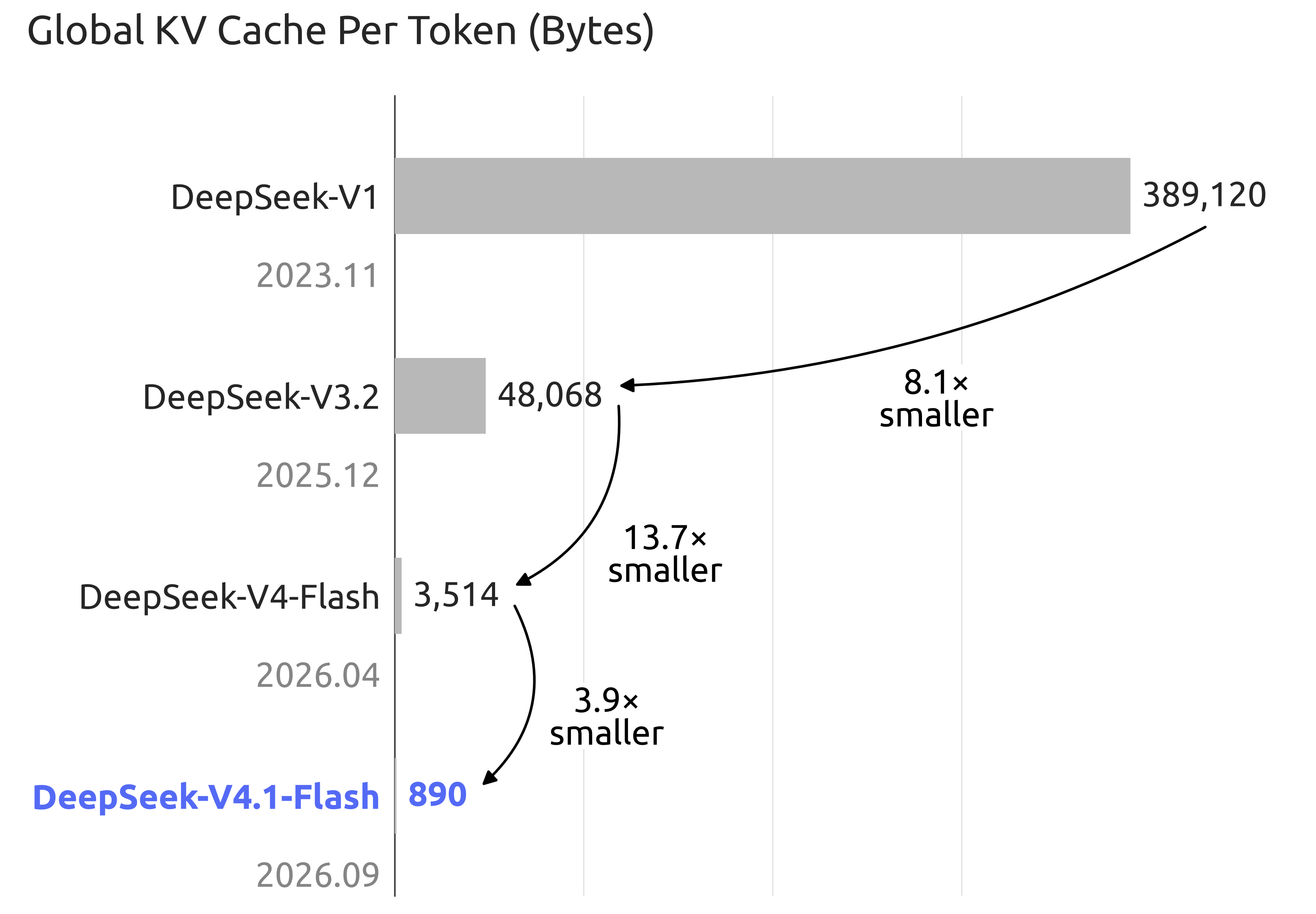
DeepSeek-V4.1-Flash: Pushing KV Cache Compression to 890 Bytes per Token
Paper of the week · DeepSeek-AI · arXiv:2609.19969
Most model releases matter for what the model can do. DeepSeek-V4.1-Flash matters for what it costs to serve: 890 bytes of KV cache per token, 437x less than DeepSeek-V1, while staying in the frontier band on agentic benchmarks.
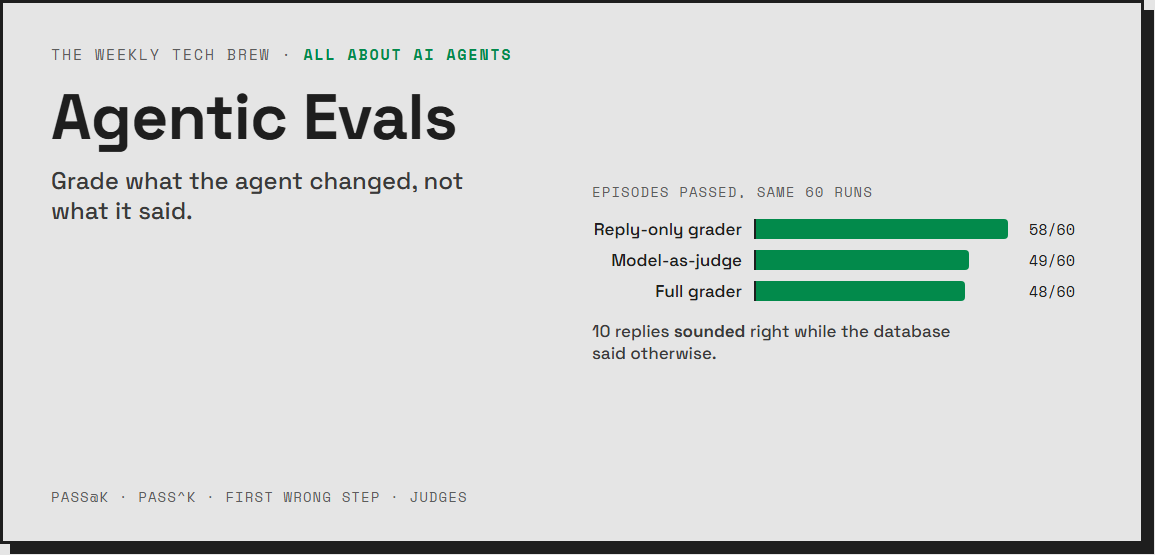
1. Agentic Evals: Did the Agent Do the Job, and Will It Do It Again?
Guide · by Sergii Makarevych on X
An agent can say “your refund is on its way” while no refund exists. This guide shows how to grade agents by what they changed, measure reliability, not just capability, and find exactly where a run broke.
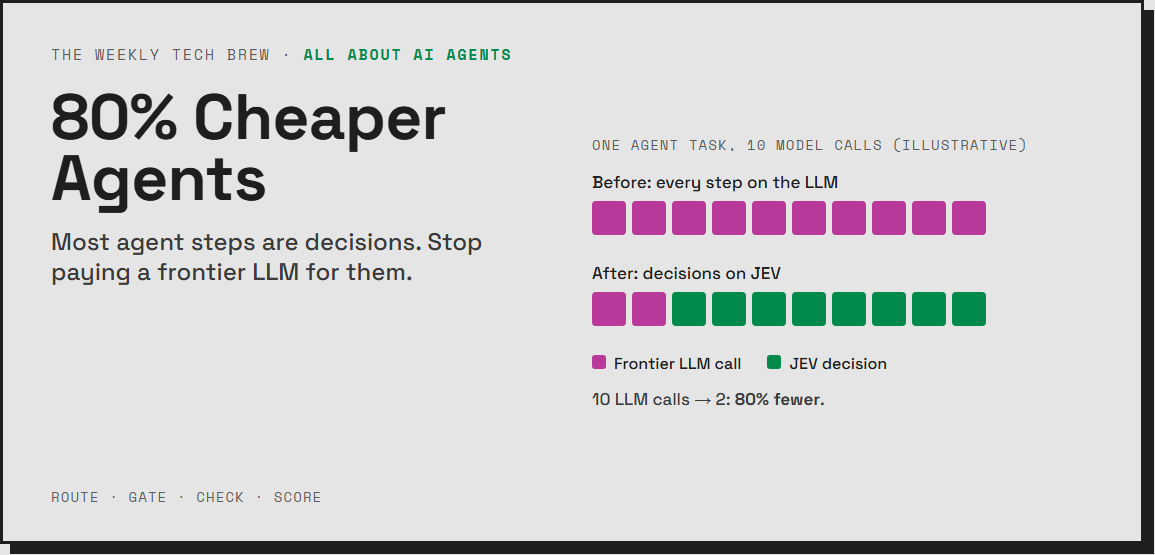
2. 80% Cheaper Agents: Stop Paying a Frontier LLM for Every Decision
Deep dive · by Trisham Patil
Most steps in an agent loop aren’t writing; they’re deciding: route this, approve that, check the result. Move those decisions to a fast decision model like JEV and keep the frontier LLM for the work that needs it.
3. Which AI Model in October 2026? The Complete Guide and What Each Costs
Guide · by Kirill on X
September reshuffled the whole model map: GPT-6 Astra, Claude Fable 5.1, Claude Opus 5.5, GPT-6 Sol and Luna all landed. Here’s what each one is for, what it costs, and how to route between them.
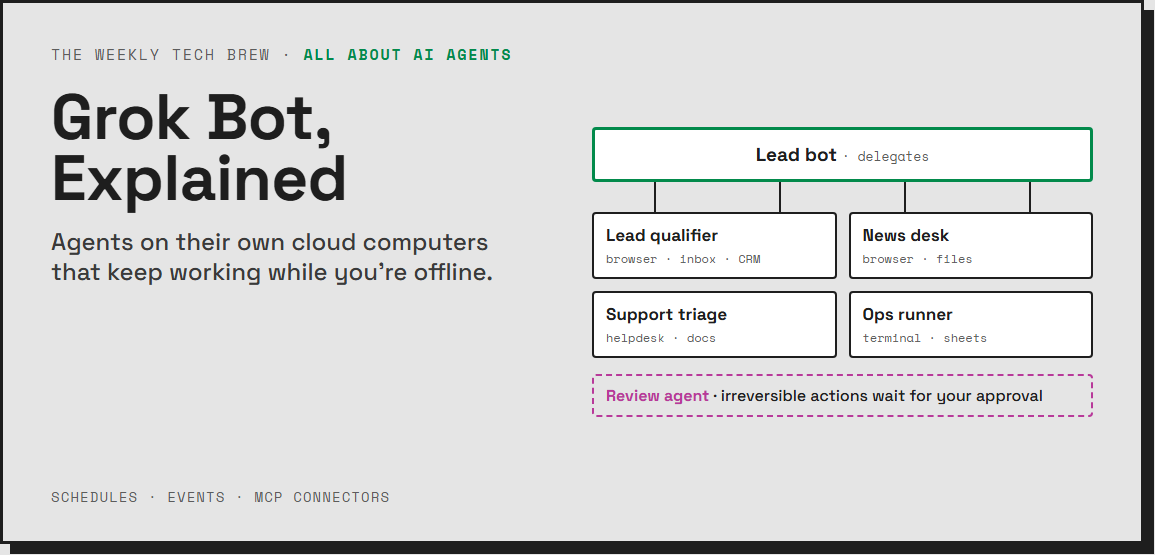
4. Grok Bot Explained: Always-On AI Agents in the Cloud
Guide · by Anatoli Kopadze on X
Grok Bot gives every agent its own computer in the cloud, so it keeps working after you close the laptop. No servers to rent, no loops to wire, just describe the job.
AI News
1. AI Is Being Tested on Doing AI Research
Top Models Couldn’t Reinvent a Recent AI Method
Epoch AI checked whether AI agents can invent a new machine learning technique by themselves. Each agent had to improve a small open model and match a training method from a human research paper it had never seen, with a budget of 3,000 GPU-hours.
The verdict, for now, is no. GPT-5.6 Sol did best, recovering about 35% of the human method’s gains even on the most generous reading.
Claude Fable 5 looked better at first, but only because it picked the best of several runs, which broke the rules, so Epoch threw those results out. Epoch also found the agents’ own write-ups overstated what they had achieved.
Agents Also Struggle to Train Better Models
The new MMPostTrainBench benchmark set agents eight tasks: improve a model on images, audio, video or code repair.
In 52.1% of model–task pairs, the agent finished with a worse model than it started with. Agents also often failed to submit their own best attempt.
Labs Are Spending as If That Will Change
OpenAI researchers are using coding agents at a rapidly growing rate. Working from charts OpenAI published in September, Epoch estimates the median researcher was using about $601 a day of coding agents by mid-August (at list prices), up from under $1 in January.
The top 10% were above $7,000 a day, and both numbers have roughly doubled every month. The caveats: the data are self-reported by OpenAI and priced at list rates, not what OpenAI really pays. Epoch calls the trend “probably unsustainable.”
A New Way to Measure How Close Models Are to New Ideas
Kaiyue Wen, Tengyu Ma and Percy Liang asked five models to reconstruct the core ideas of 87 recent deep learning papers. Rather than marking each answer right or wrong, they counted how many hints a model needed to get there.
The best model, Claude Fable 5.1, needed the equivalent of about 70 yes-or-no hints per idea. Watching that number fall over time shows how close models are to coming up with research ideas on their own.
2. Who Gets a Say in Governing AI
Lina Khan Rejects Big Tech’s Self-Policing Pact
Tech leaders recently signed a voluntary White House accord to police their own AI development, which President Trump described as “morally” binding.
Former FTC chair Lina Khan dismissed it on ABC’s This Week: “Self-regulation efforts by big tech have been a proven failure.” She compared it to the promises social media companies made a decade ago.
New York City Puts AI Labs Under Oath
Policy leads from Anthropic, OpenAI, Google and Meta testified under oath about the risks of their technology at a New York City Council hearing. Council Speaker Julie Menin seemed frustrated at times by how few direct answers she got.
Former Google DeepMind researcher Alex Turner told the council that misaligned AI “may be more powerful than China” one day.
African Governments Want a Hand in Setting Safety Standards
At a UN Security Council meeting on AI, African leaders pushed for a bigger role in setting global AI standards. Companies and governments across Africa are adopting American and Chinese AI fast, but many countries have no way to test whether those systems are safe for their own people.
“There’s essentially no real discussion about AI safety. So, there’s a real vacuum,” associate professor Jonathan Shock told Rest of World.
Britain’s AI Minister Says the UK Has “Effectively Banned” Superintelligence
UK AI minister Kanishka Narayan argued against a new frontier AI law. His reasoning: Britain lacks the energy and data centres to build superintelligence, and its copyright rules already make training a frontier transformer model illegal.
Meanwhile, Prime Minister Andy Burnham says he will put AI “center stage” when the UK holds the G20 presidency next year.
Utah Asked 40 Residents What AI Rules They Want
Lawfare sat in on a Utah citizens’ assembly: 40 residents, picked to mirror the population of three counties, learned about AI and worked out which policies could win broad support.
The piece also interviews Audrey Tang, Taiwan’s former digital minister, on using assemblies like this to break deadlocks over AI regulation.
Critics Say the UN’s AI Panel Is Asking the Wrong Question
The UN’s new scientific panel on AI picked the OpenAI and Hugging Face agent breach as its first case study and framed it as a model alignment failure.
Three AI governance researchers push back. Calling it a technical mystery, they argue, lets the companies off the hook. The real issue is corporate conduct and accountability.
3. AI Is Moving Into War Planning
The Pentagon Buys AI From Five-Minute Videos
Wired reports on Tradewinds, a Defense Department programme where companies pitch AI products in videos of five minutes or less. A panel reviews submissions at least once a month, and accepted companies can then be bought from faster.
OpenAI, Anthropic and Google are among the newer contractors the programme has made easier to fund.
Researchers Warn Against AI-Run War Games
Mark Riedl and Glenn Matlin argue that AI-driven war games shouldn’t shape military planning, doctrine or crisis response without an auditable safety case.
In these simulations, language models both play the actors and decide what happens next, which can quietly nudge a game toward escalation. Standard benchmarks, they say, can’t prove the models are safe for this job.
Today’s AI Could Make a Nuclear Crisis Worse
In the Bulletin of the Atomic Scientists, Paul Slovic and Herbert Lin warn that AI doesn’t need to be superintelligent to help start a nuclear war.
Current systems could amplify human blind spots, speed up escalation and bury decision-makers in information in the middle of a crisis.
Tech Companies Are Becoming Defence Suppliers
A Nature review of two new books looks at power over warfare shifting from governments to tech companies. Steve Feldstein’s Bytes and Bullets and Sharon Weinberger’s Valley of Death trace the race for AI, drones and chips.
4. AI Is Moving Onto Your Own Computer
Microsoft Puts a Coding Model on the Laptop
Microsoft and GitHub are rolling out local models in GitHub Copilot. The first is an on-device version of Microsoft’s MAI Code 1.1 Flash, shrunk to about 53 GB so it runs on the Surface Laptop Ultra.
Microsoft says it scores 70.8% on SWE-Bench Verified, close to the cloud version’s 72.6%. By the end of October, Copilot will decide by itself whether a task runs locally or in the cloud. Commands the agent runs are also moving into a sandbox that limits which files, networks and passwords it can touch.
A $3,499 Box Built to Run Personal Agents
Ghost, a startup founded by 19-year-old Zain Javaid, raised an $11 million seed round led by Andreessen Horowitz.
Its first device, Core, costs $3,499, packs an Nvidia GPU and has no screen; you use it from your phone. Ghost says the models and your personal memory stay on the device, so not even the company can read them.
Models That Read Raw Text Instead of Word Pieces
Most language models chop text into fixed chunks called tokens, which is why they trip over spelling, rare words and some writing systems.
Ai2 published research in Nature on converting existing models to read raw bytes instead, using a short extra training run rather than training from scratch. Its converted Qwen 3 8B comes close to the original, and the checkpoints are free to download.
5. Rules Arriving on the Ground
Utah Will Let AI Prescribe Acne Drugs
Utah approved a pilot, run by startup Nolla Health, in which AI assesses acne patients and writes prescriptions. It uses a patient questionnaire and skin photos to choose from a list of low-risk drugs.
At first, a licensed clinician signs off on every prescription; later, the company may be allowed to prescribe without that check. The state will require outside audits of the company’s claims.
San Francisco Pauses New Data Centres
San Francisco’s Board of Supervisors unanimously approved a 45-day ban on new data centres, effective immediately. The city can stretch it to about two years while it works out permanent rules, in the hometown of many of the world’s most valuable AI companies.
6. Decision APIs Go Mainstream
OpenAI Launches Decisions (Beta), and It Looks a Lot Like JEV
OpenAI has opened a public beta of the Decisions API: send it text or images plus a list of questions, and it returns typed answers with probabilities instead of free-form text. OpenAI says it is about 10x faster than the Responses API, and it costs $0.10 per million input tokens with no charge for output.
If that sounds familiar, it should. It is almost exactly the “System One” decision model that TypeSafe AI built with JEV, which I broke down earlier this week.
AI songs outstreamed Taylor Swift. A North Carolina man was sentenced to 18 months in prison for using bots to stream hundreds of thousands of AI-generated songs.
In April 2023 alone, his fake songs racked up 80.9 million streams, against 9.3 million for Taylor Swift’s entire catalogue that month. The Justice Department says he is the first American criminally charged with AI-assisted streaming fraud.
Rabbit Holes to Deep Dive
Fifty corners of the internet worth getting lost in this weekend: live maps of every plane, ship and lightning strike on Earth, centuries-old maps, NASA’s entire archive, and free libraries of books, art and music.
Videos of the Week
1. Prompt Engineering Playbook by Anthropic
Video · Shared by @ZaraAi56190 on X
A walkthrough of Anthropic’s playbook for writing prompts that get reliable results from Claude, from structuring instructions to giving the model the right context.
How agents can build and use knowledge graphs: connecting entities and relationships so an agent can reason over structured memory instead of loose text chunks.
4. Andrej Karpathy’s Free Lecture: Agents, Loops, Harnesses and Self-Improving Systems
Video · Shared by @HeyShobhan on X
A free two-hour lecture from Andrej Karpathy, who spent years at OpenAI and Tesla, building up from agents to loops, harnesses and self-improving systems. It’s a strong free alternative to a paid AI engineering course.
If the harness part clicks, my Harness Engineering breakdown goes deep on the runtime inside production coding agents.